“I love Charlotte Pence’s electric poems. There’s nothing like emotions under pressure so great they enter the heart like bullets, like water that lies quietly in a pool but leaps from a hose with a force that knocks down doors.”
–David Kirby, author of over 30 books of poetry and collections on soul and rock ‘n’ roll.
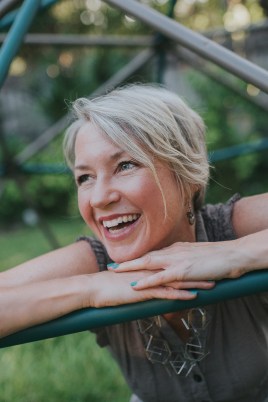
Charlotte Pence is Mobile, Alabama’s inaugural poet laureate and a 2024 Academy of American Poets Laureate Fellow. Author of two full-length poetry books, two award-winning chapbooks, a composition handbook, and editor of The Poetics of American Song Lyrics, Charlotte recently moved to Austin to direct the MFA program at Texas State University. Recent honors include fellowships from MacDowell, the Sewanee Writers’ Conference, and a Patterson residency at Vanderbilt. Other awards include an individual poetry fellowship from Alabama Council for the Arts, Tennessee Arts Commission, the Redden Fund, Virginia Center for the Creative Arts, the Alvin H. Nielson Memorial Fund, the Discovered Voices Award, the New Millennium Writing Award, multiple Pushcart nominations and many other honors. Her poetry and and creative nonfiction have recently been published in Alaska Quarterly, Epoch, Harvard Review, Kenyon Review Online, North American Review, Denver Quarterly, Passages North, Rattle, Prairie Schooner, Southern Review, Poetry magazine and featured on The Slow Down.
The commonality among Pence’s writing is a drive to find the relationships among seemingly disparate phenomena and putting them all together in one room—or one stanza, since, ultimately, the art of poetry is the art of combination.
Charlotte Pence’s most recent book of poems, Code (Black Lawrence Press, June 2020) received the 2020 Book of the Year award from Alabama State Poetry Society and was a finalist for Foreword’s Best Indie Poetry Book of the Year 2020. Code details not only the life cycle of birth and death, but also the means of this cycle: DNA itself. In light of exciting new developments such as CRISPR that would allow us to alter genetics and eradicate certain diseases, this book approaches ethical questions from an angle that science cannot. Ultimately, though, Code is a book about grief—specifically, how to accept it. These poems attest to how we preserve what is lost, not only through story and poetry, but also through nonverbal means like cave art and DNA.
Many Small Fires (Black Lawrence Press, January 2015), which won Foreword Reviews poetry book of the year award (silver medal), merges the personal with the scientific by engaging with current evolutionary theory. Many Small Fires explores her father’s chronic homelessness through the larger narrative of human evolution. The physiological changes that enabled humans to form cities, communities, and households are a way of triangulating her own personal story. Critic Erica Wright hailed the book as “astonishing” and observed that “… science augments rather than obscures the personal details, showing us what humans—not to mention Australopithecines—have in common.”
Other poetry books include two chapbooks, Weaves a Clear Night (Winner of the Flying Trout Chapbook Award, 2011) and The Branches, the Axe, the Missing (Winner of the Black River Chapbook Award, 2012).
Recently, Pence has been writing more creative non-fiction. A new essay on poetry’s power to give hope during times of hopelessness can be found on Poets.org. Her hybrid essay on baby blues and astronomy measurements originally published by Harvard Review has been anthologized in Borderlands and Crossroads. Another lyrical essay published in Booth magazine is collected in their ten-year anniversary issue. And a new essay on fathers is recently published in Zone 3 and was a Notable Essay of the Year from Best American Essays 2020. Her new poetry book also includes two essays.
Pence also wrote a handbook that merges creative writing with composition titled The Writer’s Path: Creative Exercises for Meaningful Essays (Kendall Hunt, 2004). While working on her Ph.D. at the University of Tennessee, she sought a book that treated song lyrics as literature. When she couldn’t do so, she created The Poetics of American Song Lyrics (University Press of Mississippi, 2012). This anthology, the first of its kind, considers song lyrics as appropriate for study in a literature classroom and includes essays by Wyn Cooper, Claudia Emerson, Beth Ann Fennelly, Peter Guralnick, David Kirby, Ben Yagoda, and Kevin Young.
Recent critical work includes an essay on persona poetry, James Baldwin, and The Band, which was published in Opossum and is reprinted in an anthology on The Band by University Press of Mississippi. Other notable critical work includes an essay on the post-millennial concept collection featuring the poetry of Anne Carson, Natasha Trethewey, and Joseph Harrington. Originally published in Asheville Poetry Review, the essay is now available online at Wesleyan University Press’s site http://thingscomeonreader.site.wesleyan.edu/files/2012/04/AshvilIePoetryReview2015.pdf
 Charlotte Pence